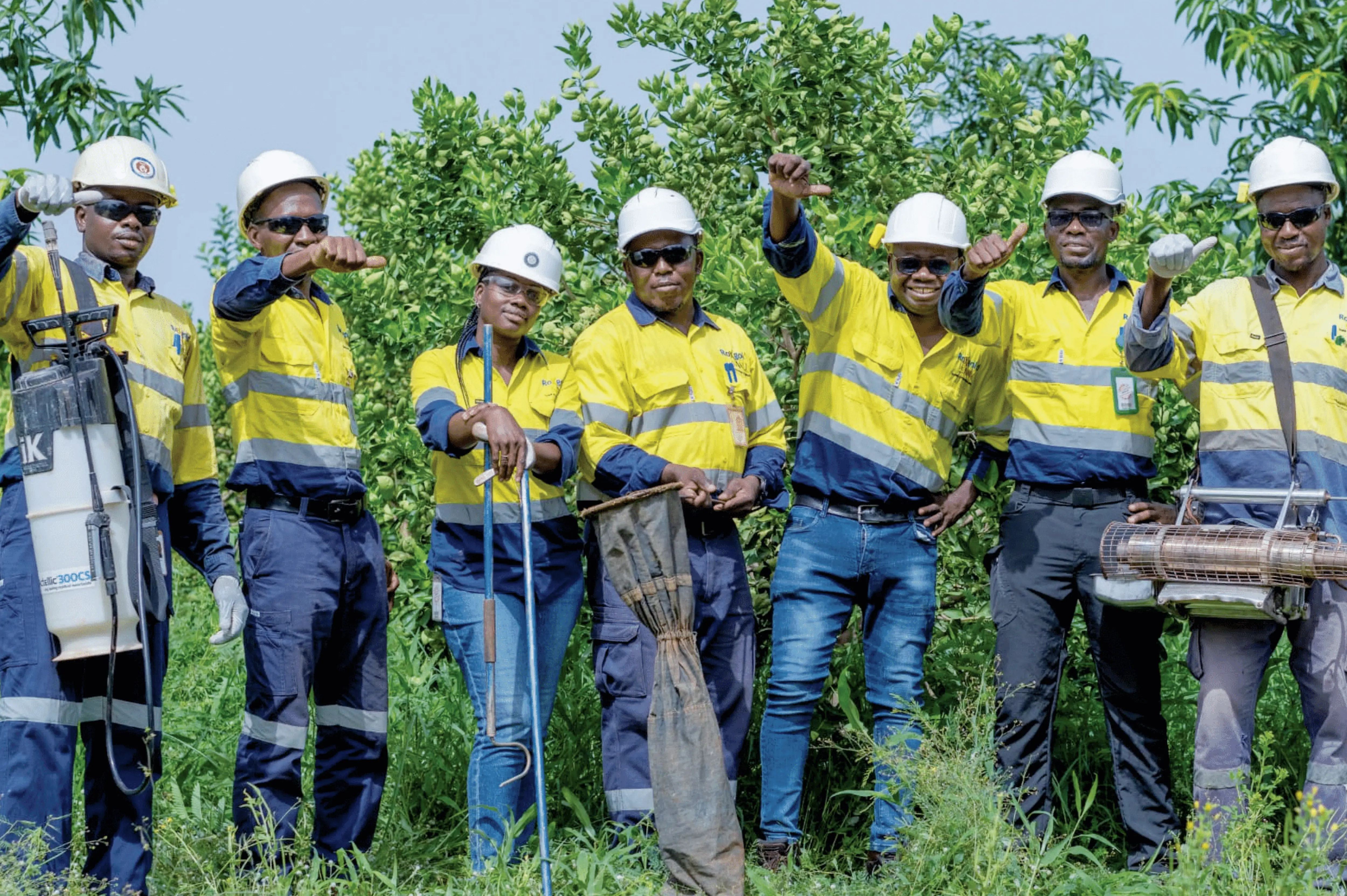
A photo of the team.

Environmental Commitment

Our mining company is deeply committed to environmental protection and reducing the impact of our mining activities. We implement a strict environmental and social management plan, compliant with the most rigorous regulations and international best practices. Our goal is to minimize our ecological footprint and rehabilitate areas impacted by our operations.
Transformation of Open Pits into Water Reservoirs

At Soleil Resources, we transform former open-pit mining sites into multifunctional water reservoirs, thus contributing to environmental rehabilitation and sustainable development of local communities.

WP1 and WP2 Projects

The WP1 and WP2 pits have been converted into water reservoirs for activities such as fish farming, livestock breeding, and market gardening. These projects illustrate our commitment to restoring ecological and economic utility to mining sites after their exploitation.

Developed Activities

Fish Farming: Tilapia (Oreochromis niloticus) have been introduced into the reservoirs to promote biodiversity and provide a source of income to local communities.
Market Gardening and Livestock: The water reservoirs are also used to irrigate vegetable crops and water livestock, thus supporting local agriculture.

Positive Impact

Environmental: Reduction of ecological footprint and restoration of local ecosystems.
Social: Creation of economic opportunities for local communities through fish farming and agriculture.
Economic: Enhancement of former mining sites into useful and sustainable infrastructure.

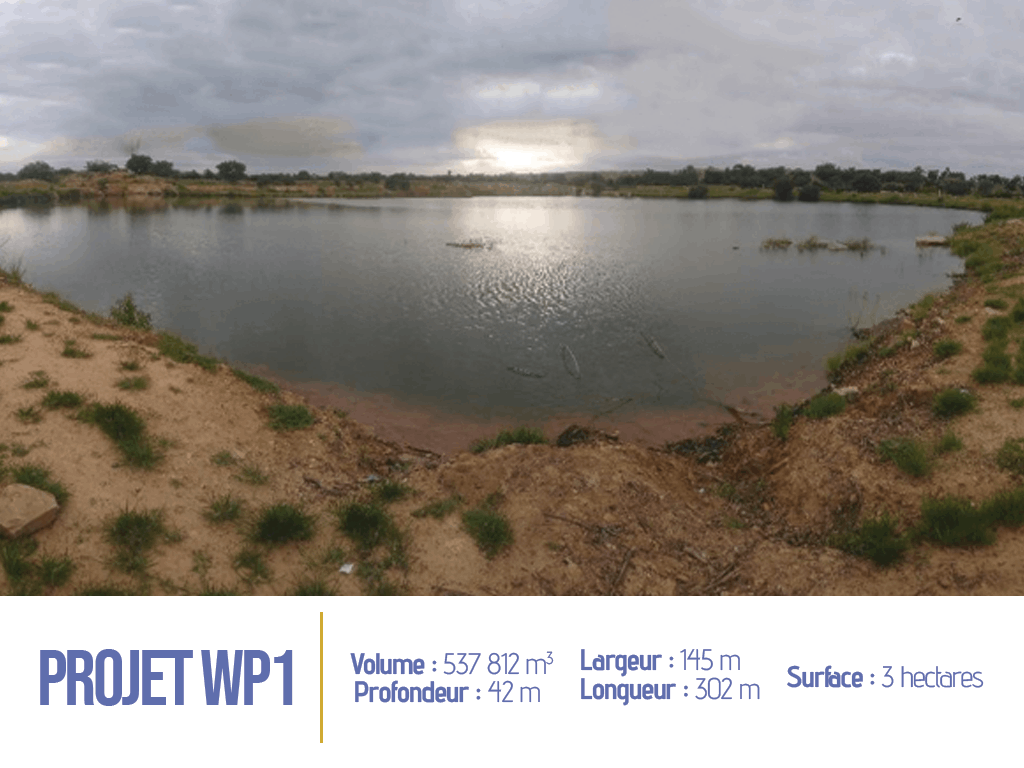
Panoramic view of WP1 Project, a water basin of 537,812 m³ located on 3 hectares with a depth of 42 m.
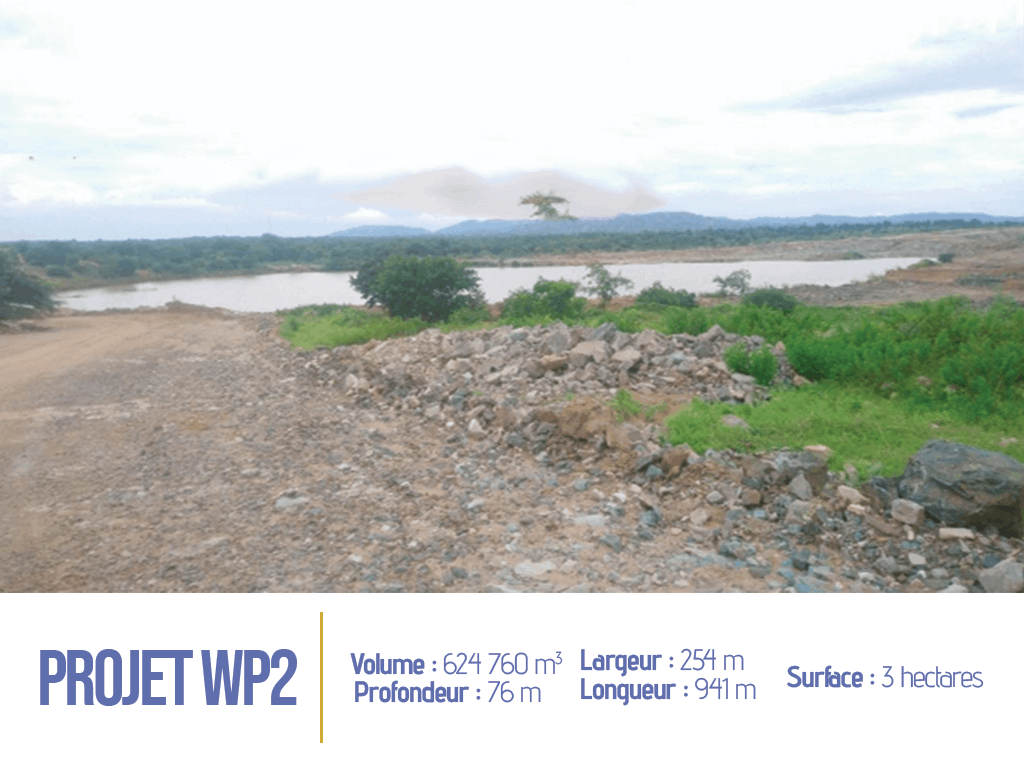
View of WP2 Project, a water reservoir of 624,760 m³ covering 3 hectares with a depth of 76 m.
Vue panoramique de trois fosses consécutives (NTV 1, 2 et 3) sur une surface de 6 hectares. Ce paysage aride met en évidence la nature des terrains exploitables.
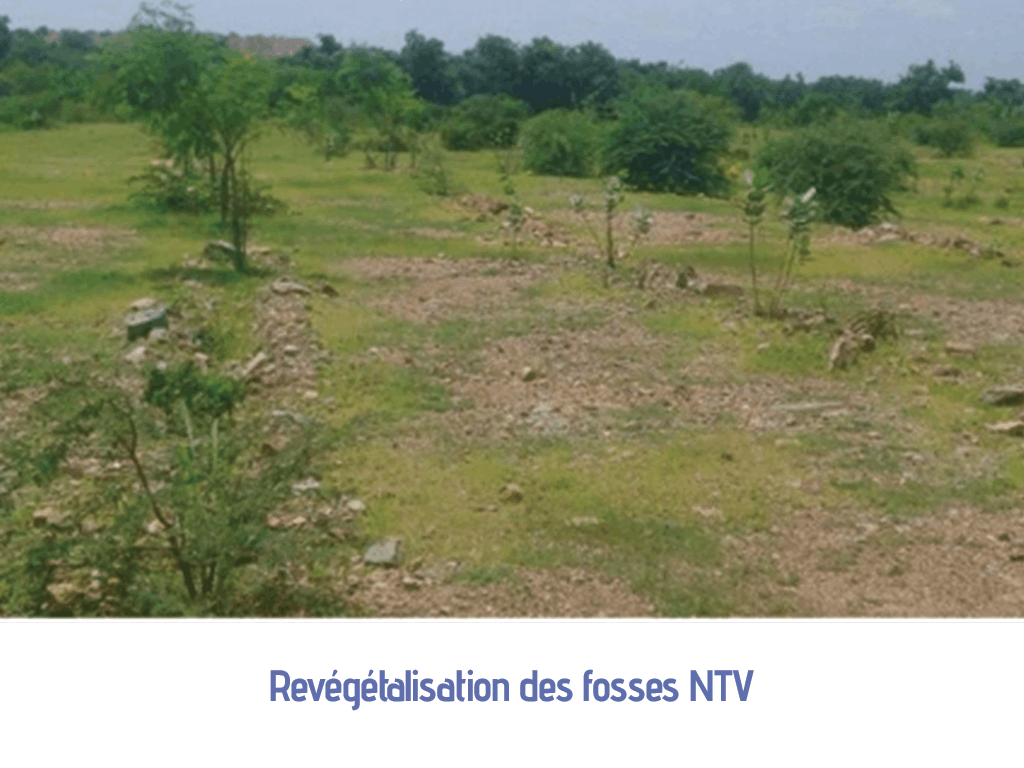
Image illustrant la revégétalisation des fosses NTV, montrant des efforts de restauration environnementale. Ce terrain verdoyant indique une amélioration de la biodiversité sur une surface modeste.
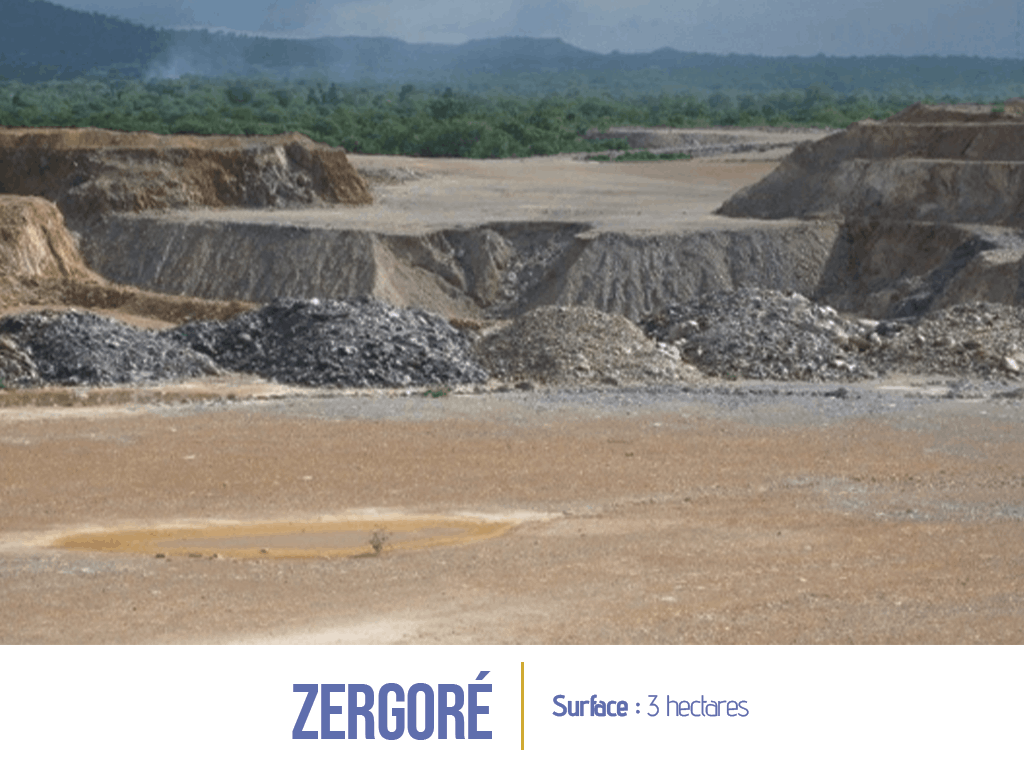
Vue des sites d'extraction à Zergoré, couvrant une surface de 3 hectares. L'image montre les résidus miniers et les débris, soulignant l'impact de l'exploitation sur le paysage.
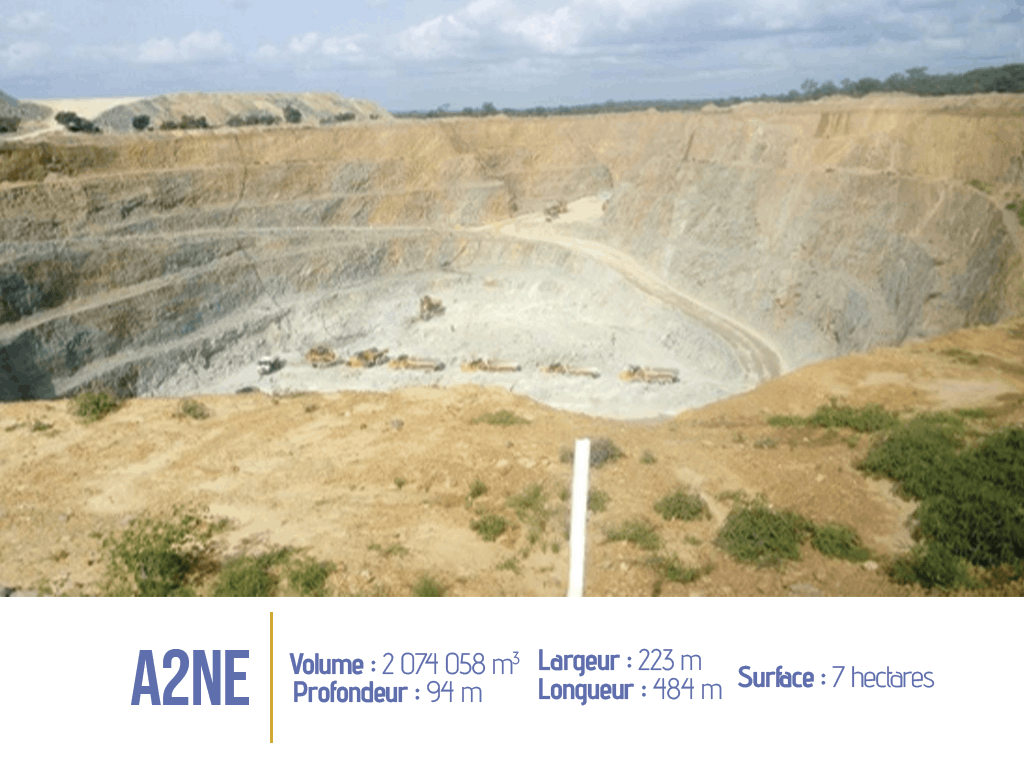
Photographie du site A2NE, présentant un grand trou d'extraction avec un volume de 2 074 058 m³. Les dimensions incluent une largeur de 223 mètres, une profondeur de 94 mètres et une longueur de 484 mètres, reflétant l'ampleur de l'activité minière.

Backfilling and Revegetation
of Pits

We are committed to restoring mining sites after their exploitation through backfilling and revegetation programs. These initiatives help reduce environmental impact, stabilize terrain, and bring life back to mining areas by promoting the regeneration of local ecosystems.

Backfilling Process: Pits are filled with appropriate materials to stabilize the terrain and prevent risks of collapse or erosion.

Addition of Topsoil: A layer of topsoil is added to prepare the ground for revegetation, thus creating fertile soil conducive to plant growth.

Revegetation: Local plant species are planted to restore biodiversity, promote natural ecosystem regeneration, and improve landscape quality.

Reforestation and Carbon Offsetting

As part of our commitment to environmental sustainability, we implement reforestation and carbon offsetting programs to reduce our ecological footprint and contribute to the fight against climate change.

Reforestation

Reforestation is essential to restore degraded ecosystems and promote biodiversity. We plant local species on rehabilitated mining sites, which helps restore natural habitats for wildlife, stabilize soils to prevent erosion, and improve air quality by absorbing CO₂ and releasing oxygen.

Carbon Offsetting

Carbon offsetting aims to neutralize greenhouse gas emissions from our activities. We carry out projects such as tree planting to absorb CO₂.

Positive Impact

Environmental: Reduction of CO₂ emissions, restoration of ecosystems, and improvement of air quality.
Social: Creation of local jobs through reforestation and conservation projects.
Economic: Enhancement of rehabilitated lands and promotion of a greener economy.

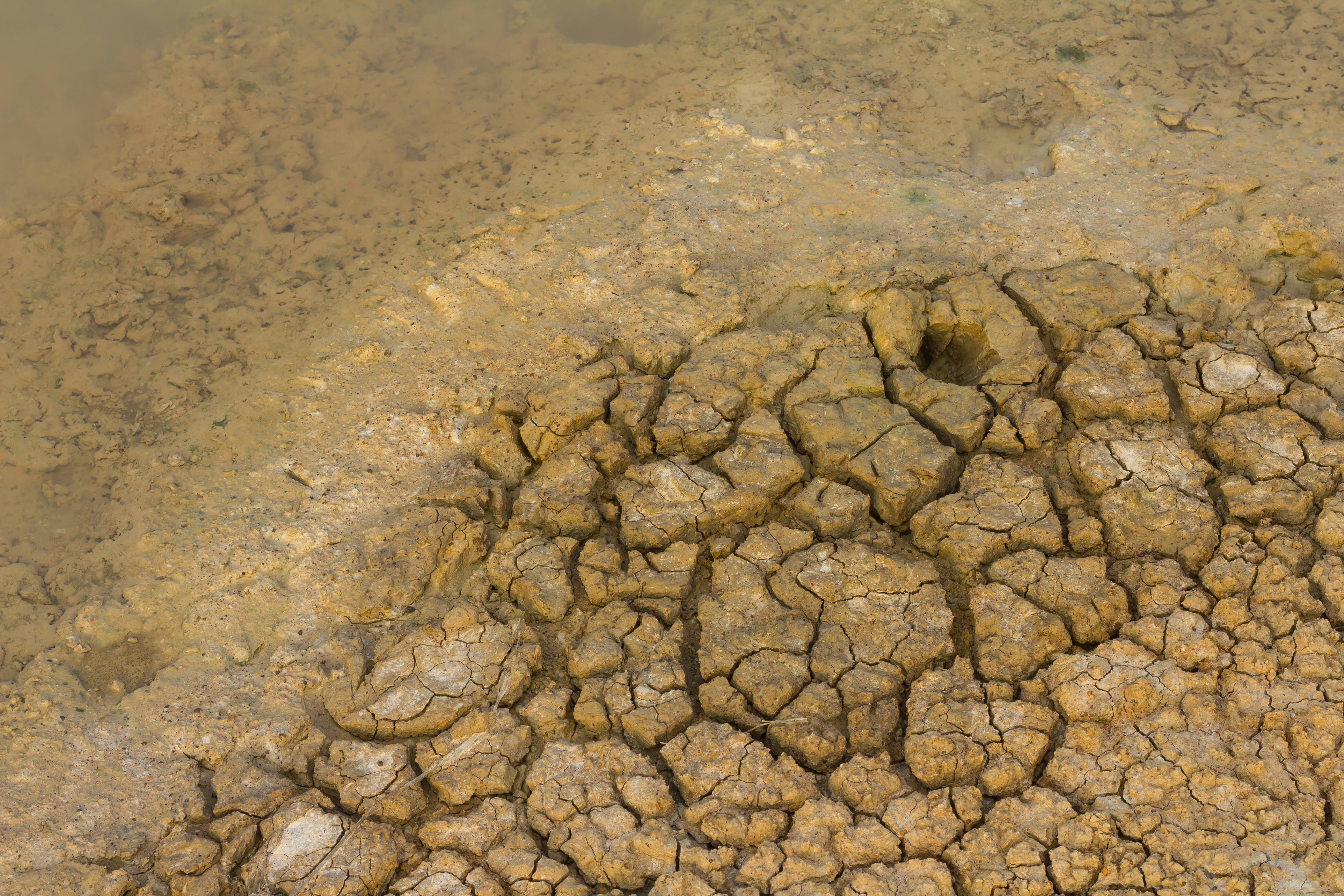
Close-up view of cracked soil, revealing the effects of drought. The image shows deep cracks in the earth, highlighting environmental challenges related to water management and land degradation.

Erosion Management

It is a priority in our environmental rehabilitation projects. We implement specific works to allow water to flow naturally, while stabilizing soils and preventing terrain degradation. These works include:
Development of drainage channels: Channels are dug to direct rainwater and avoid water accumulation, thus reducing risks of erosion and flooding.

Slope stabilization: Bioengineering techniques and retaining structures are used to strengthen slopes and prevent landslides.